
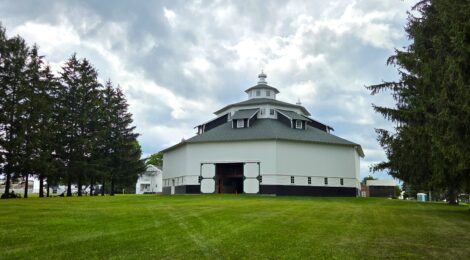
The Thumb Octagon Barn: A Piece of Michigan Agricultural History Worth Checking Out
One of Michigan’s most unique barns can be found in Tuscola County, not far from what would be the “middle of the Thumb” on a map. The Thumb Octagon Barn and Agricultural Museum is full of history and worth a stop if you’re in the area. A dedicated group of volunteers offers tours of the barn and many other buildings on the property during the summer months (see schedule on their website) and we stopped by in early August after a stop at the nearby Sanilac Petroglyphs Historic State Park. Fall Family Days will happening at the barn September 12 and 13, which will be a great time to check out all of the amazing buildings on the property.
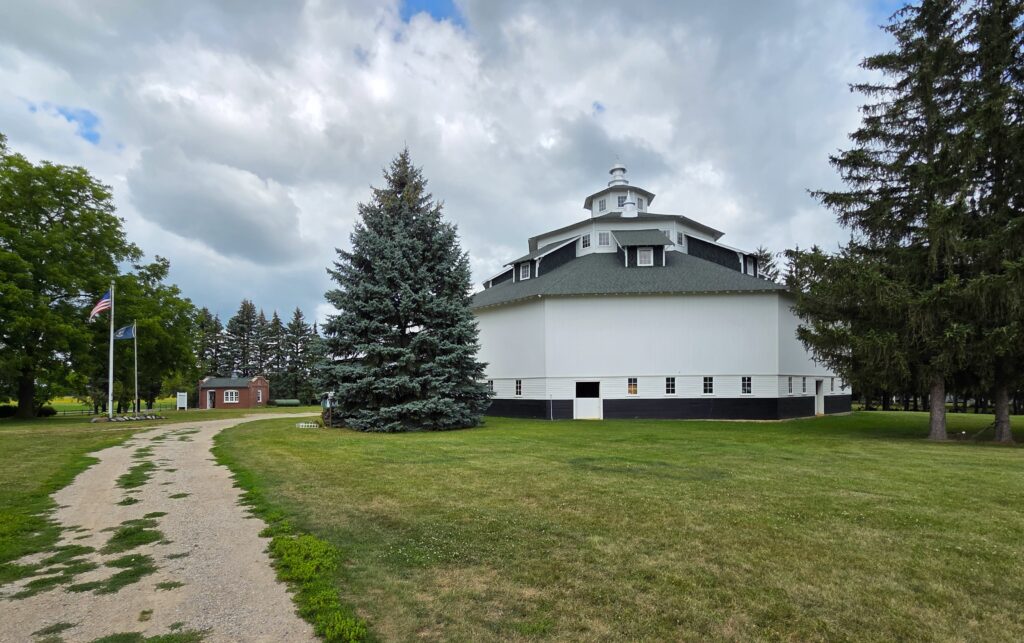
After parking, we were quickly greeted by one of the volunteers that helps keep the barn open. He started our tour ($5 per person) off and we passed by the Purdy farmhouse (1922) on our way to the barn. There’s a lot to learn about here, so we started by looking through the collection of historical photos by the barn entrance while our guide gave us the history behind this beautiful structure.
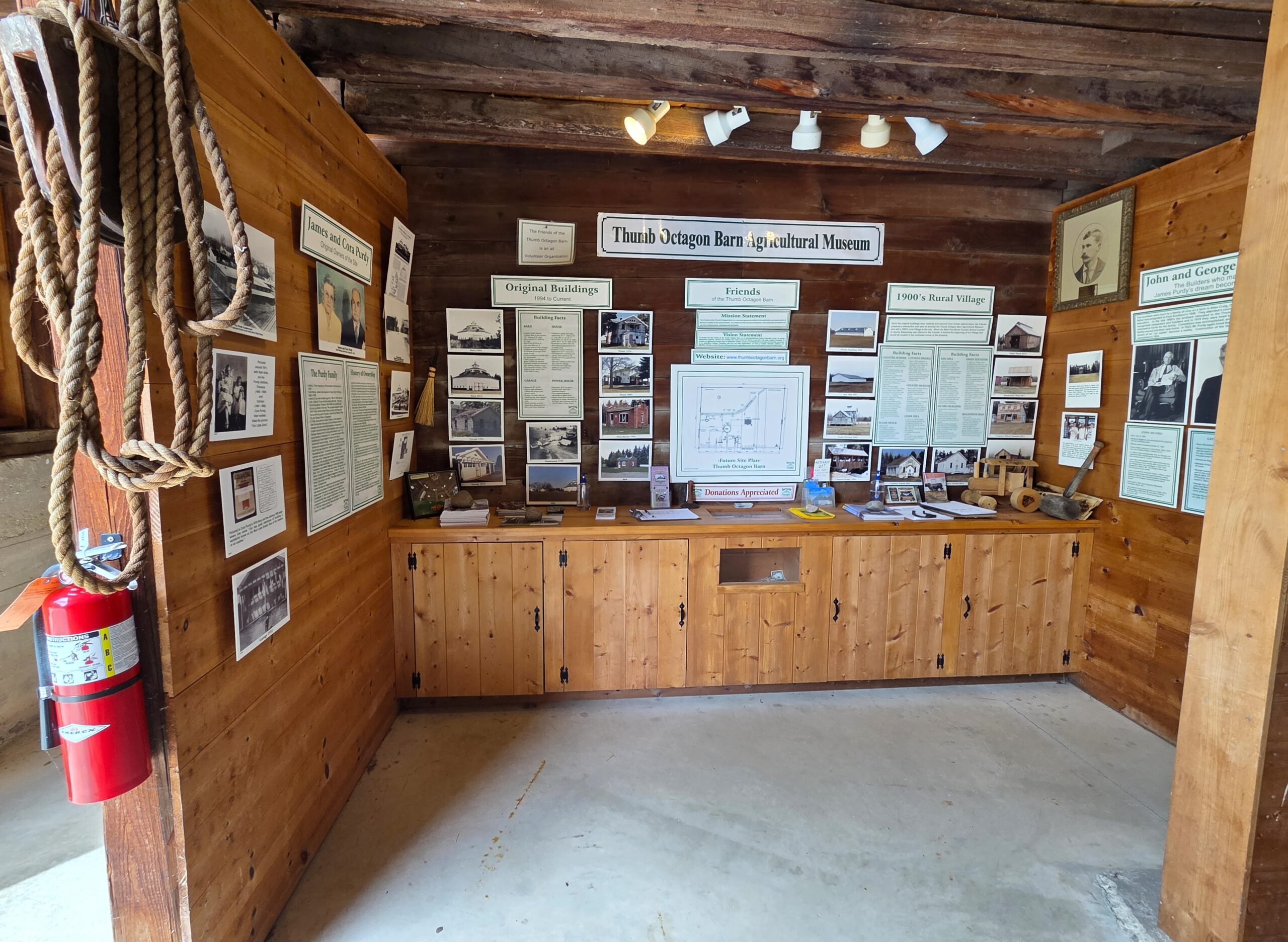
James Purdy was a successful banker in Gagetown who had seen an octagon barn in another state while traveling for work. After buying this land and building a farmhouse, he hired the Munro brothers to build this barn. The Munro brothers even enlisted the help of the local math teacher when putting together the plans for this unique barn!
The Purdy family sold the farm in 1940s and it changed hands several times before it ended up in possession of the Michigan DNR in the 1990s. The DNR had plans to incorporate the property into the surrounding state game area, but the buildings were in such a state of disrepair that they would likely be torn down. It was 1994 when the first Octagon Barn Festival took place and the Friends of the Octagon Barn was formed. This group of passionate volunteers helped save the barn, repair it, and turn it into the museum that stands here today. The Friends of the Octagon Barn host events, school field trips, and offer tours from May to September. Hearing this story reminded me a lot of the lighthouse preservation stories we’ve heard at Crisp Point or St. Helena Island and once again shows what a group of determined people can accomplish!
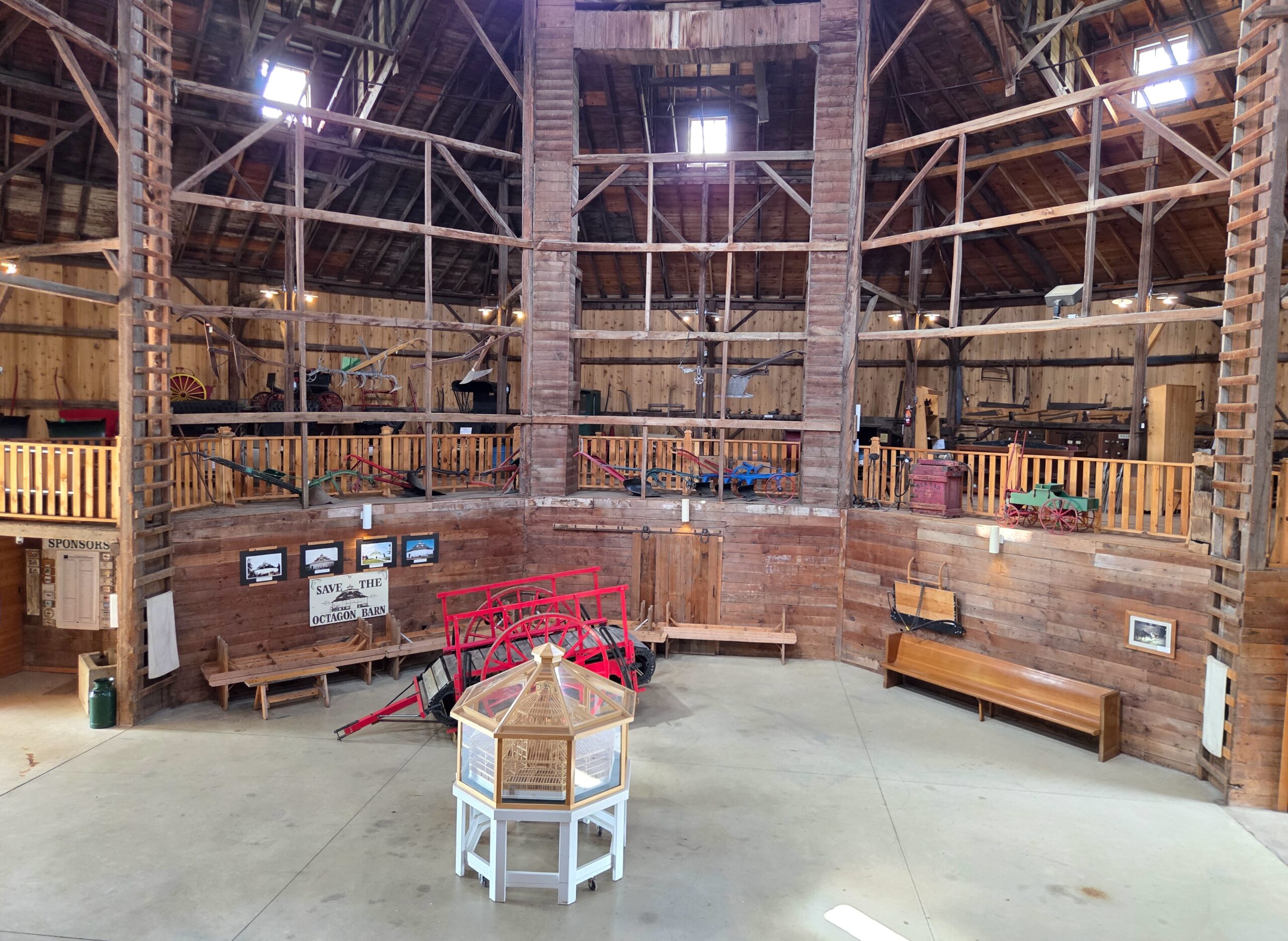
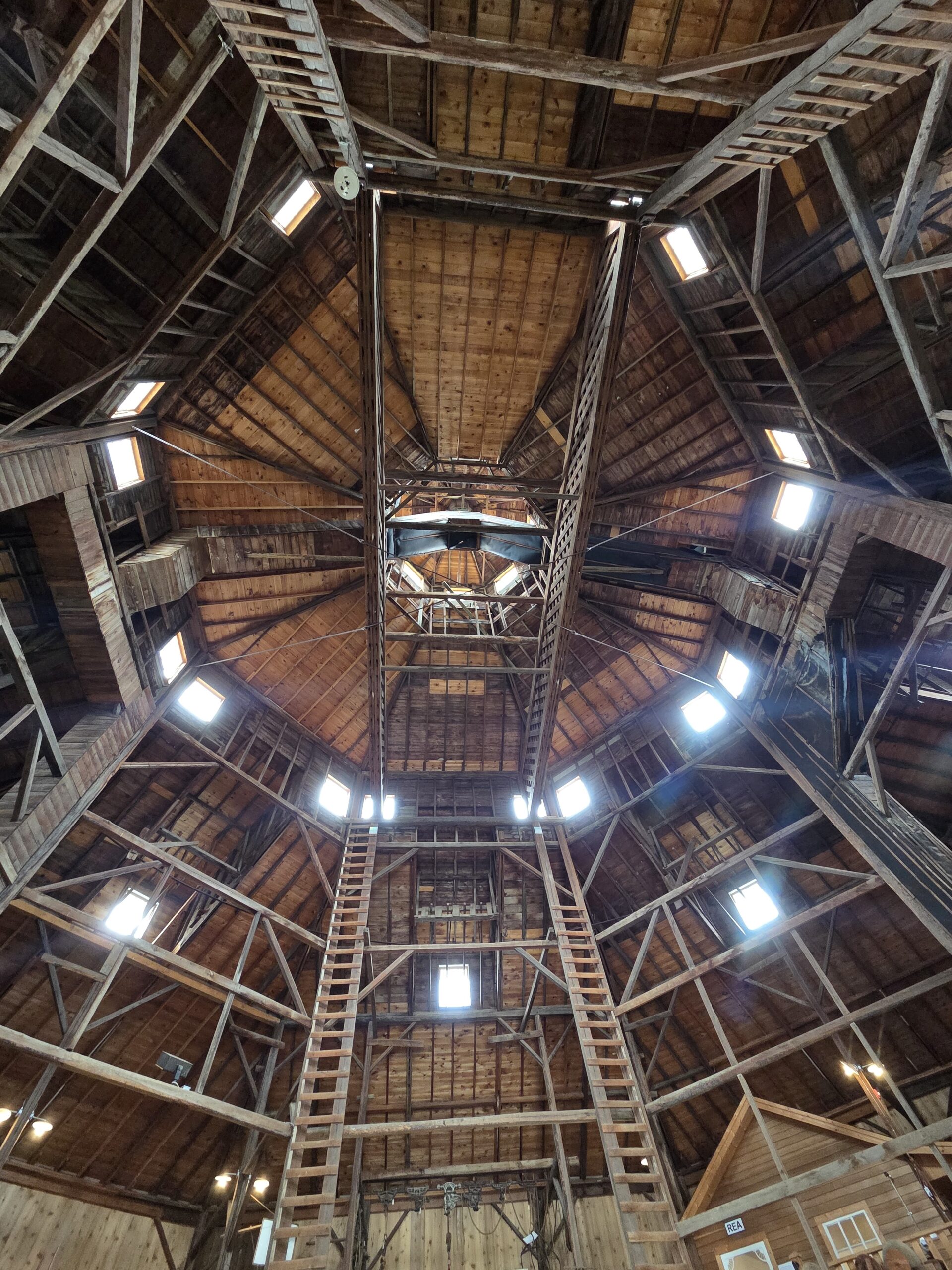
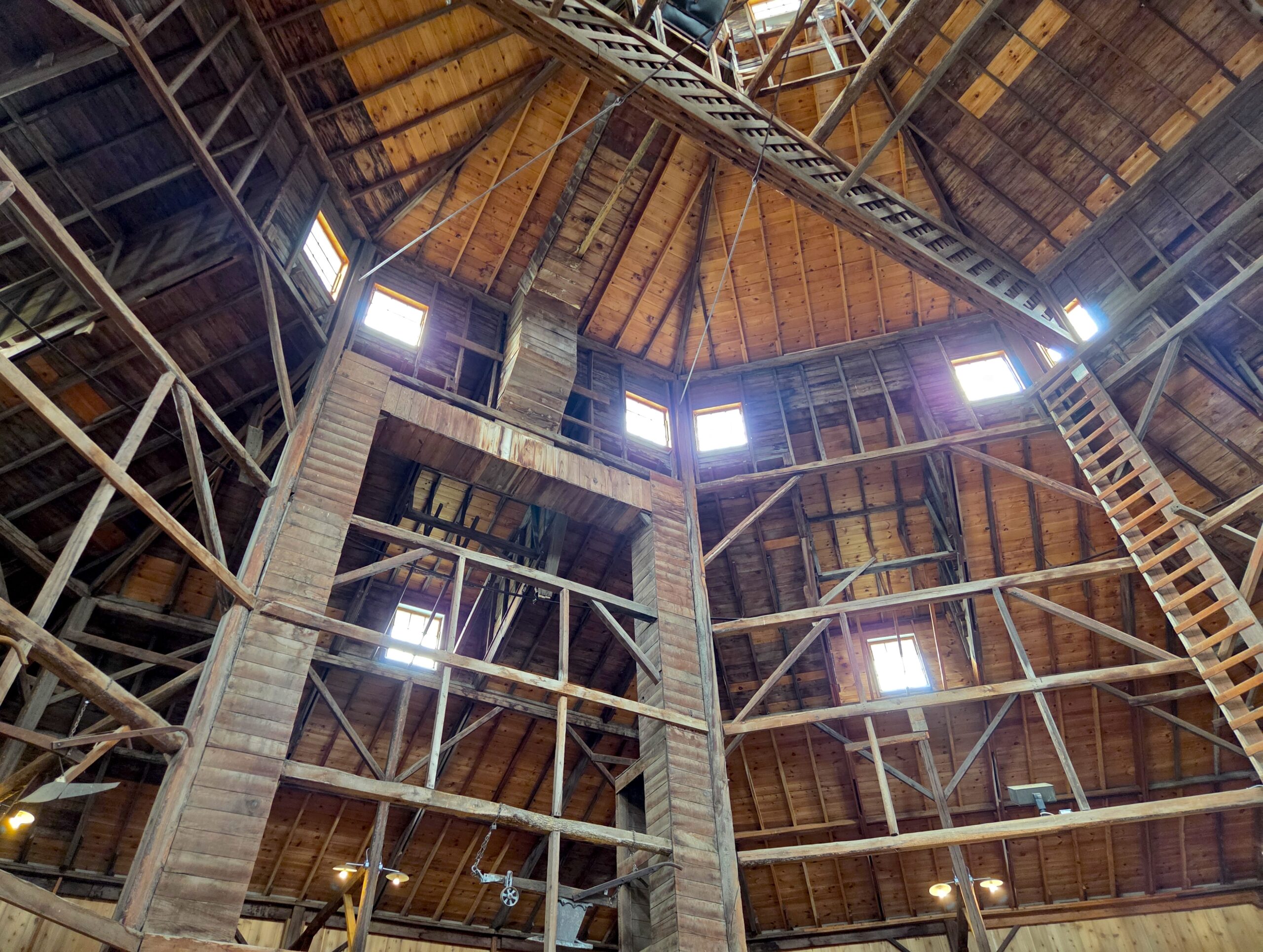
The barn looks amazing from the inside, and we learned about how its design allows natural light in. The barn also has a ventilation system where airshafts feed up to the top to keep moisture and ammonia moving out.
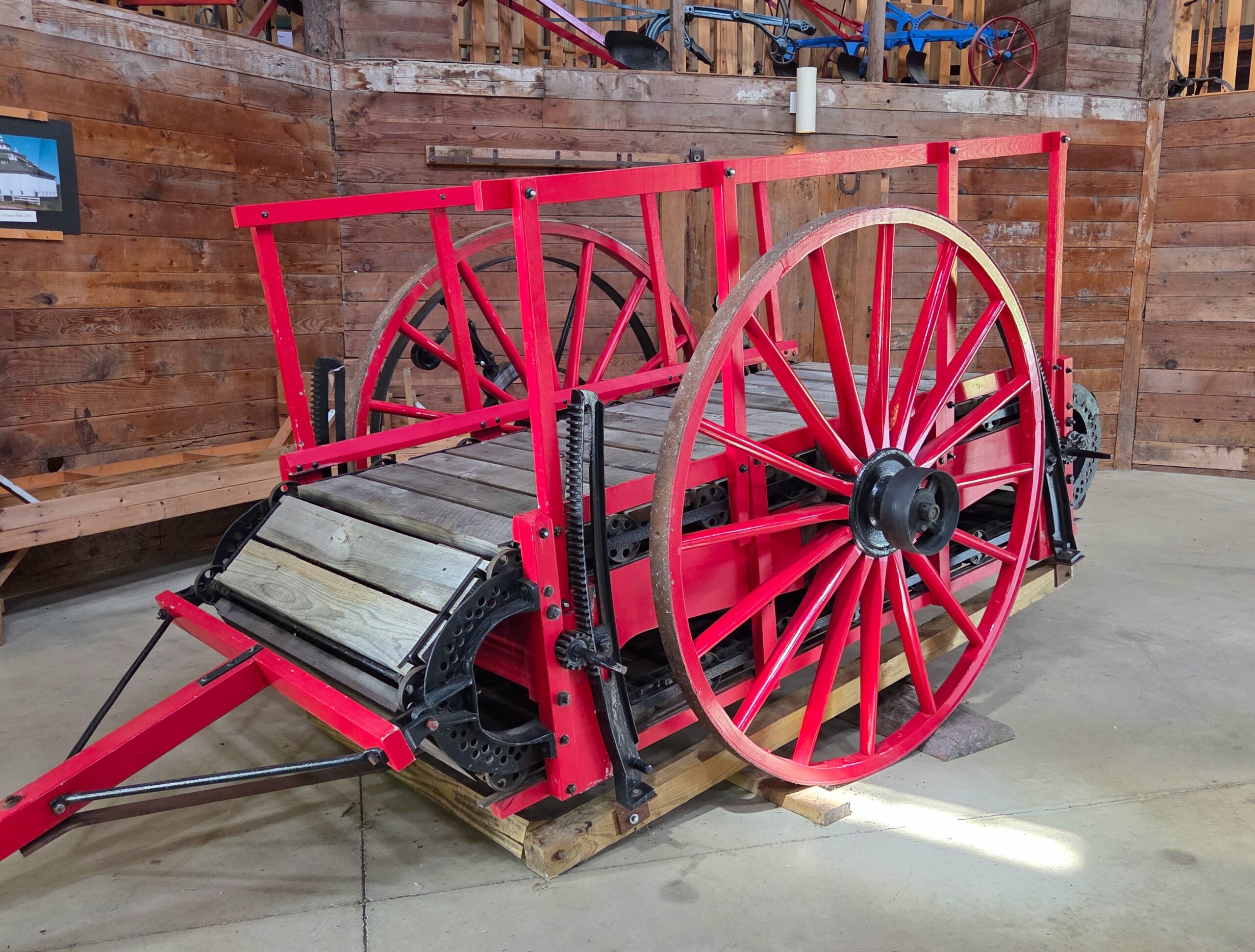
The central part of the barn had some photos and equipment on display, including this horse-operated treadmill that could help power a thresher, saw, or feed grinder.
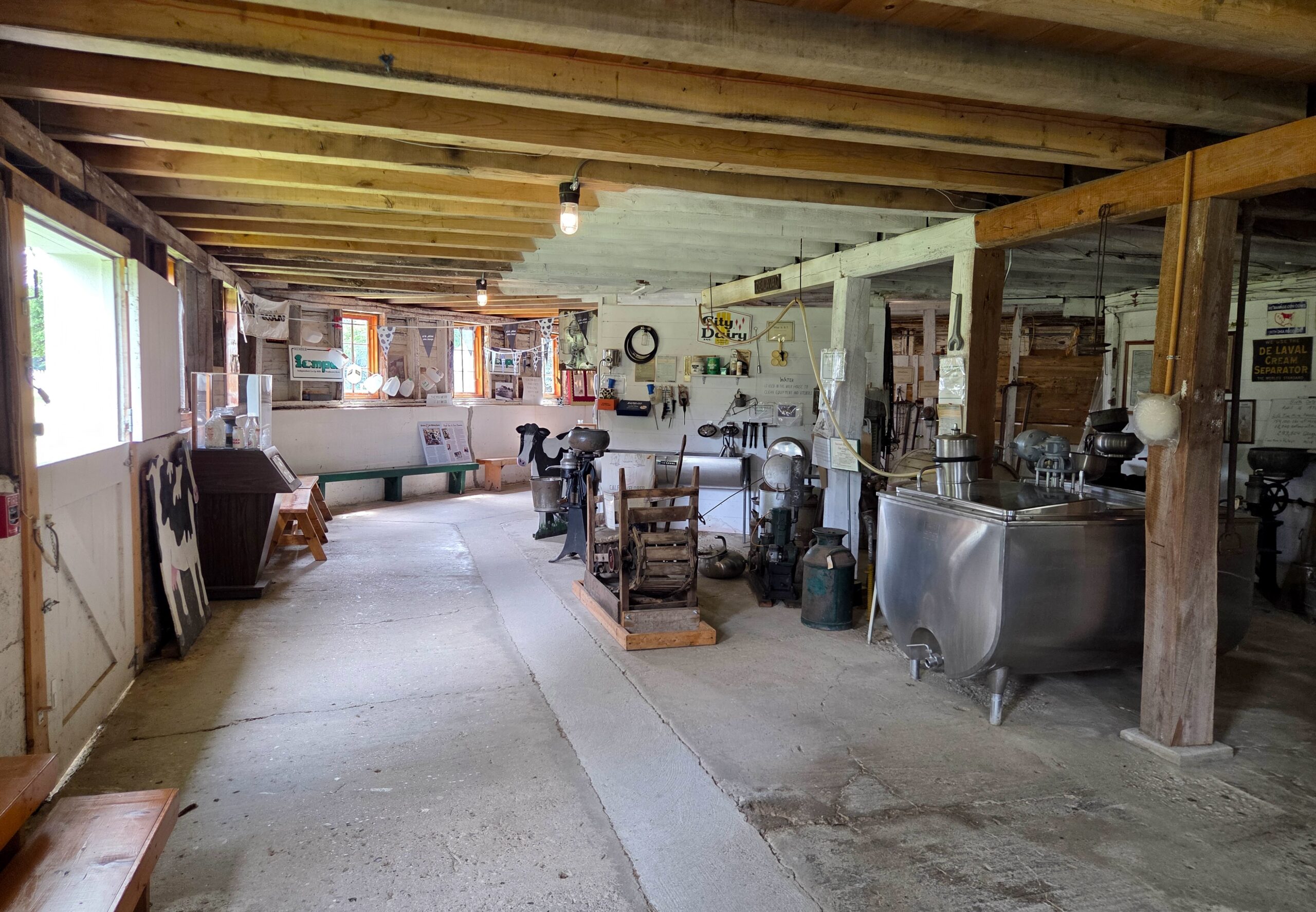
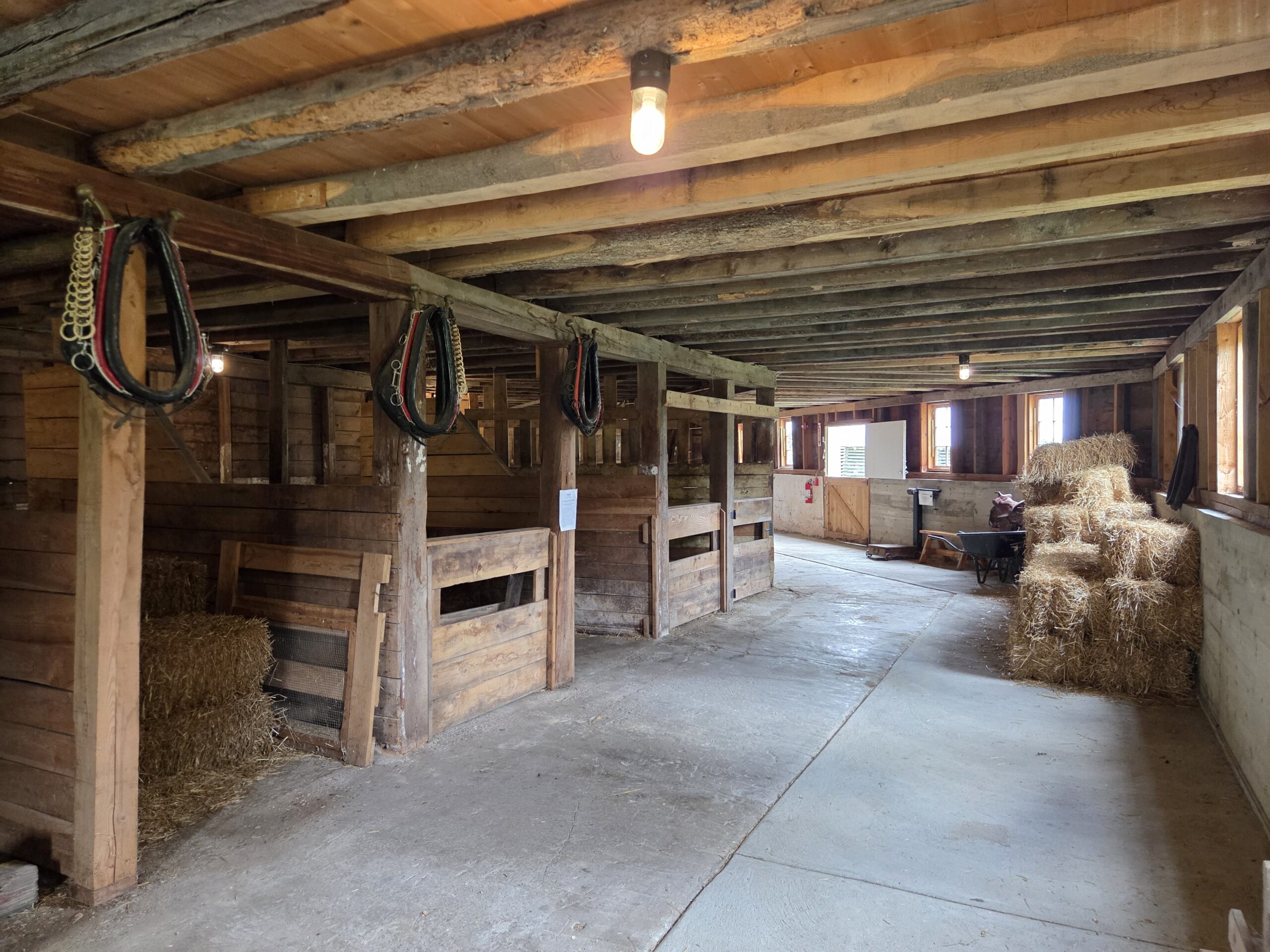
On the sides of the barn there are stables, grain storage, and tack room areas. You can walk around and check out these areas and see more historical equipment and photos that have been added to the collection here. The ground floor of the barn is 8,600 square feet and has two open ends with 14 foot x 14 foot doors. It was a warmer day when we visited but it was still comfortable inside the barn.
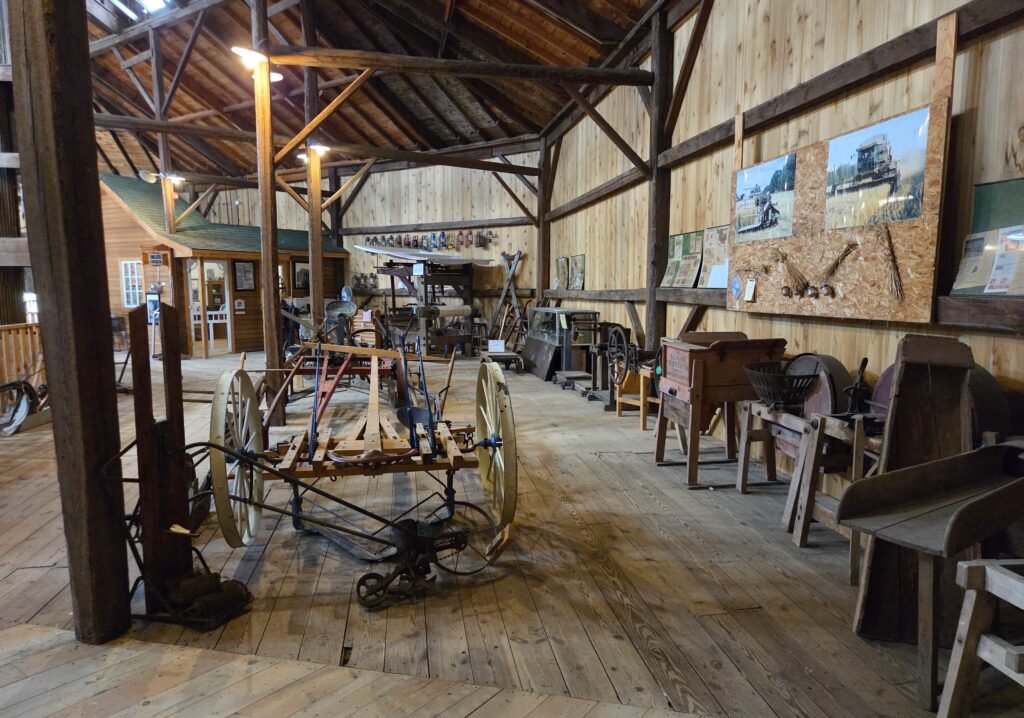
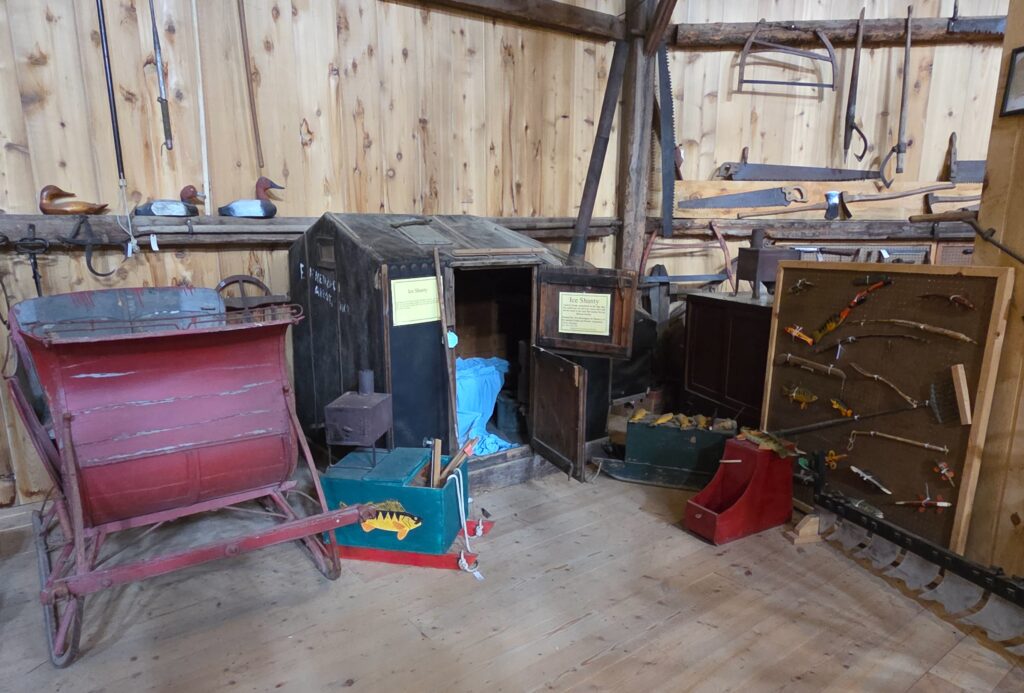
The loft of the barn has been turned into a museum, featuring farming artifacts and historical photos. We were able to walk past farm implements, ice fishing equipment, buggies, a re-created farm kitchen, models, and more. Farm work was definitely a lot harder 100 years ago!
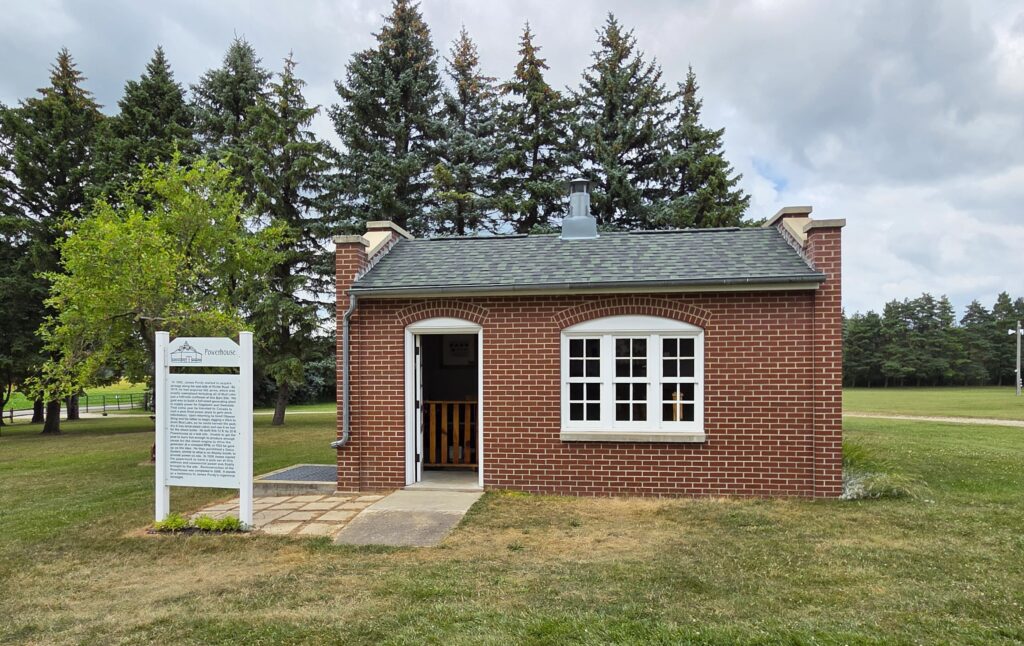
After touring the barn we headed outside to take a look at some of the other buildings. The closest one to the barn is the brick powerhouse, where Purdy hoped to get a peat fired power plant going. This building has been reconstructed to resemble the eventual 32 volt Delco system that helped him power the farm in the years before electricity reached this rural area.
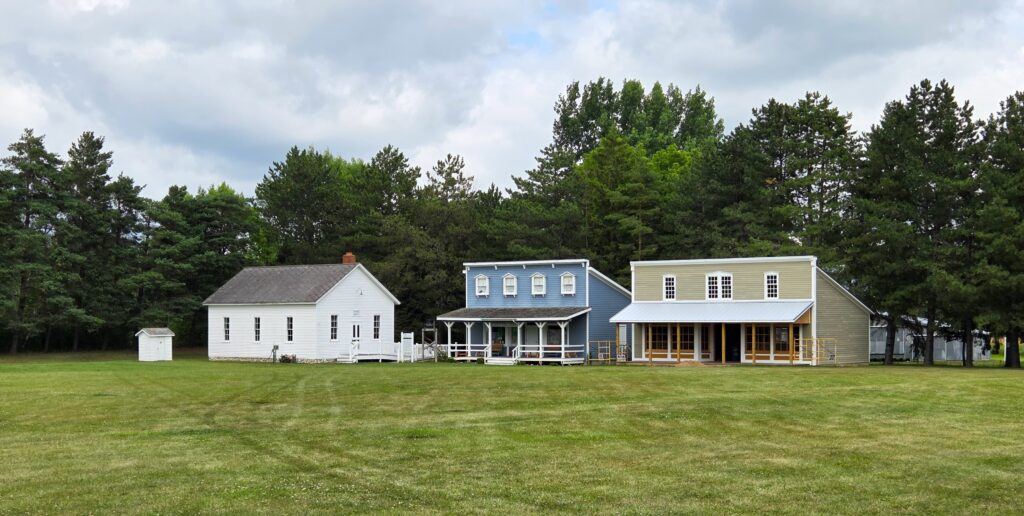
A one-room schoolhouse, a school museum, and a general store can be found in a row on one side of a ditch that runs through the property behind the barn.
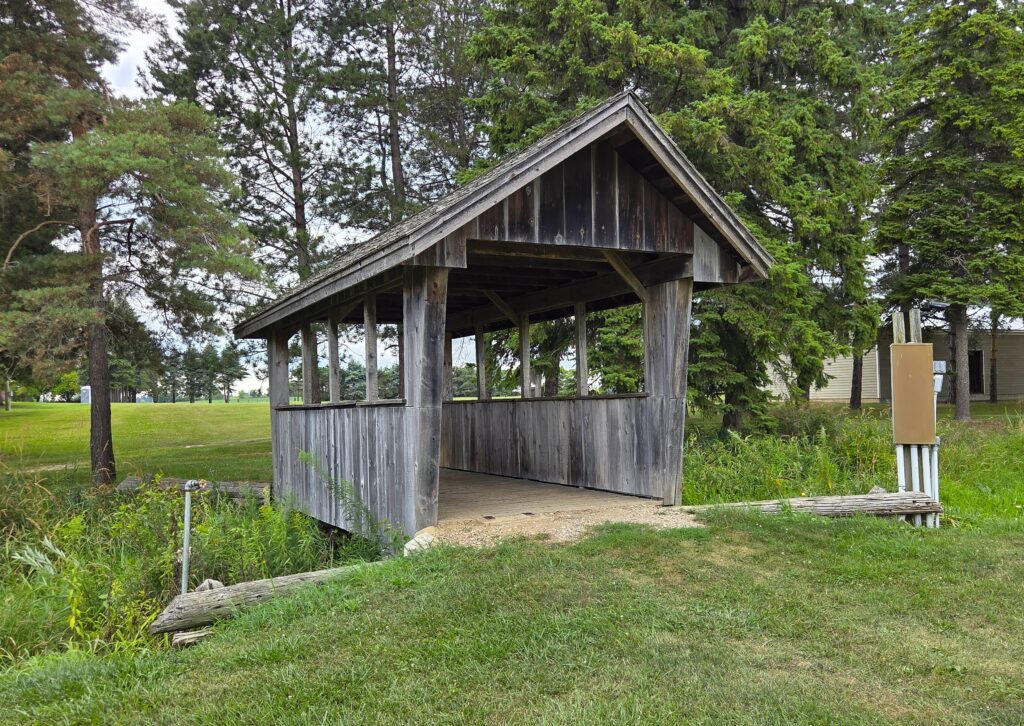
A covered bridge provides a way to cross to the other side, where more buildings await.
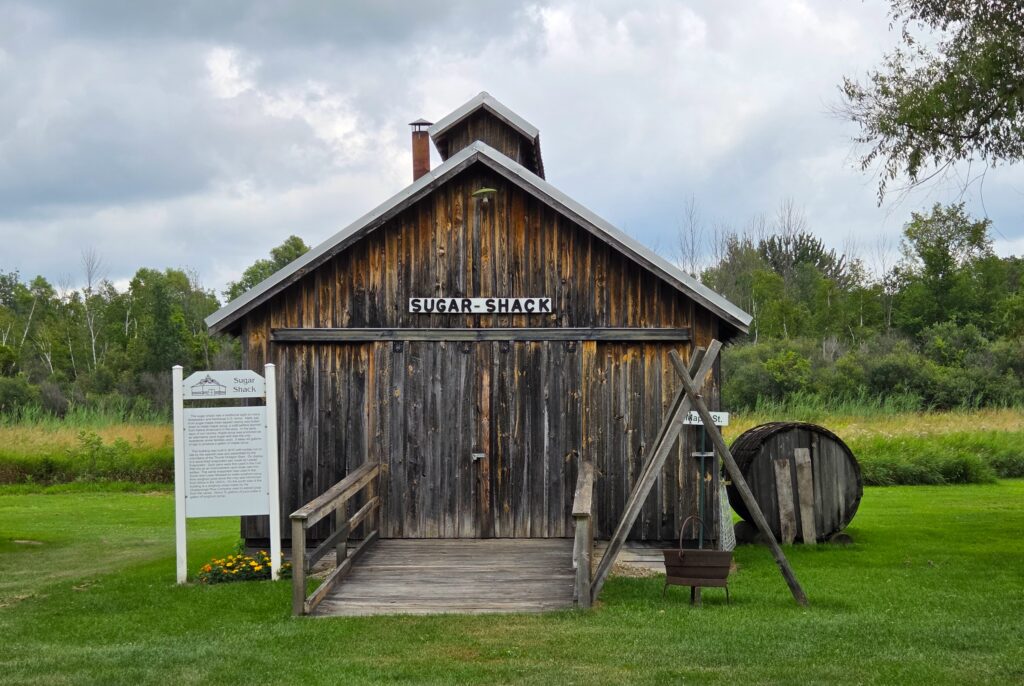
Our favorite over here was this beautiful sugar shack. There’s also a blacksmith shop, a cider mill, and a grist mill and grain elevator. These buildings are open during special events with live demonstrations so everyone can see how they would have operated in the past.
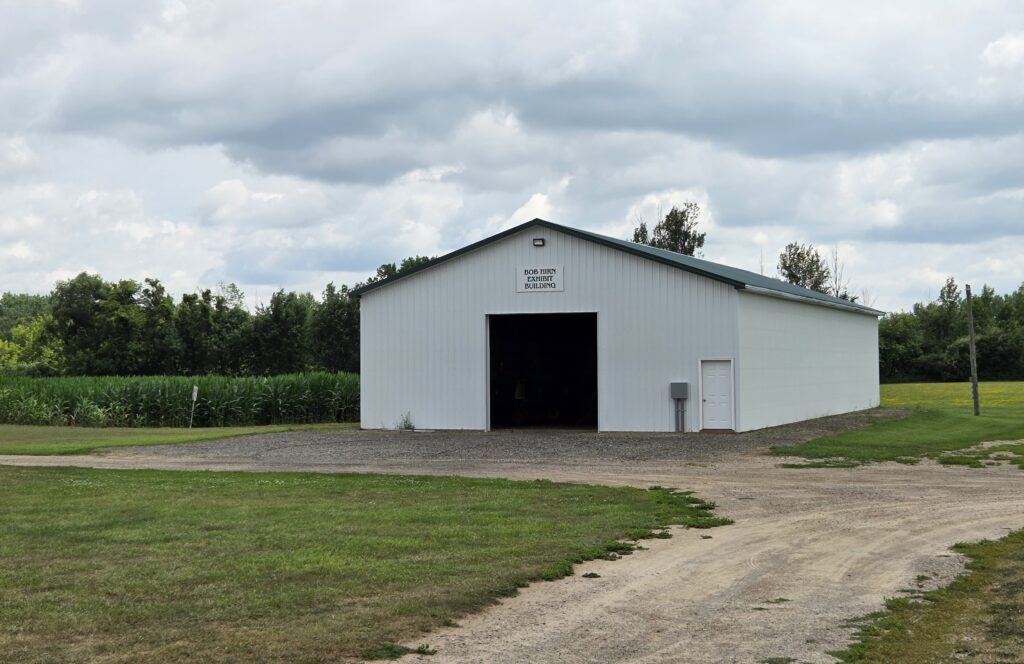
You’ll also see a couple larger pole barns by the parking area. These are used for storage, events hosting, and one has a saw mill. We could have easily spent several more hours here exploring everything!
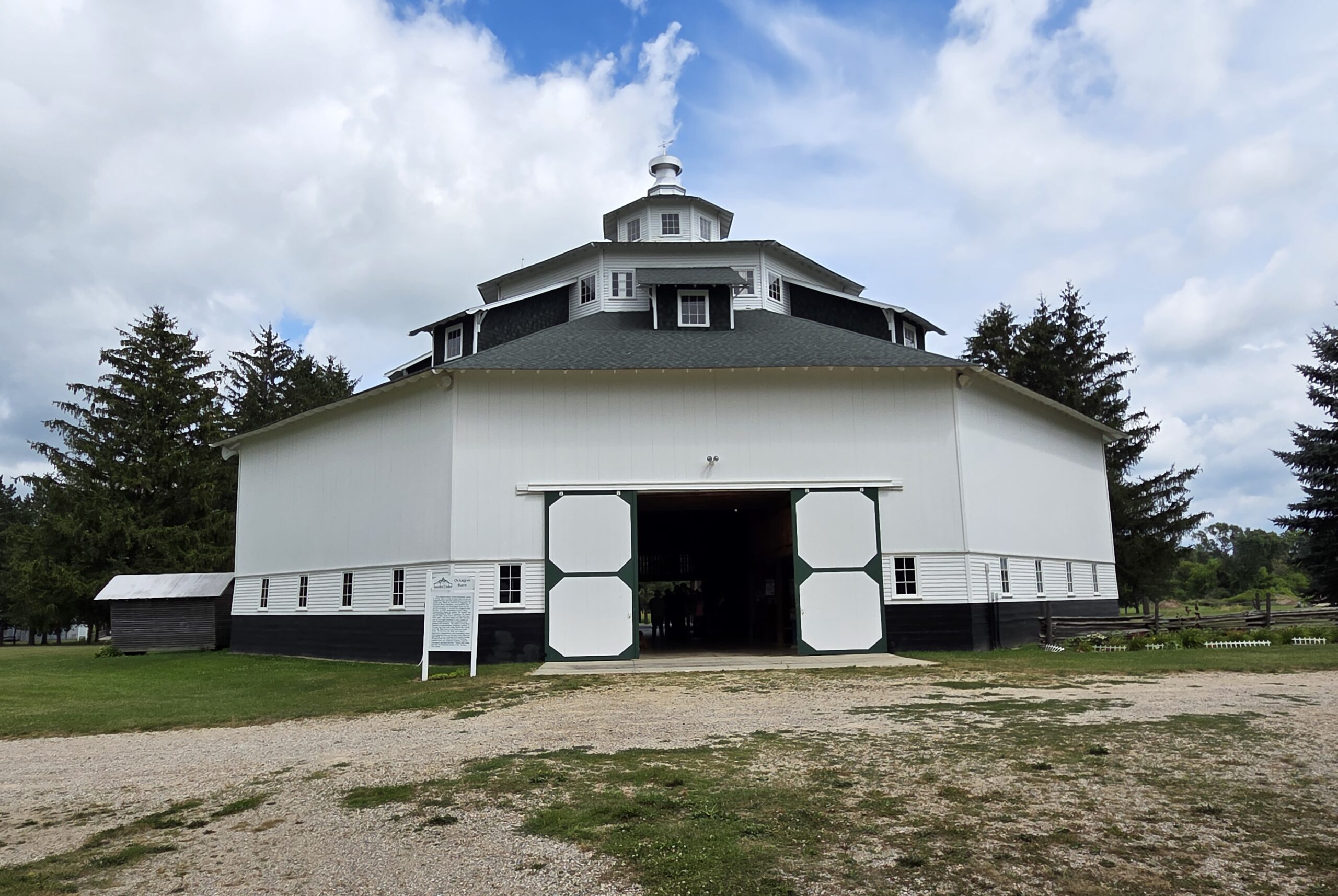
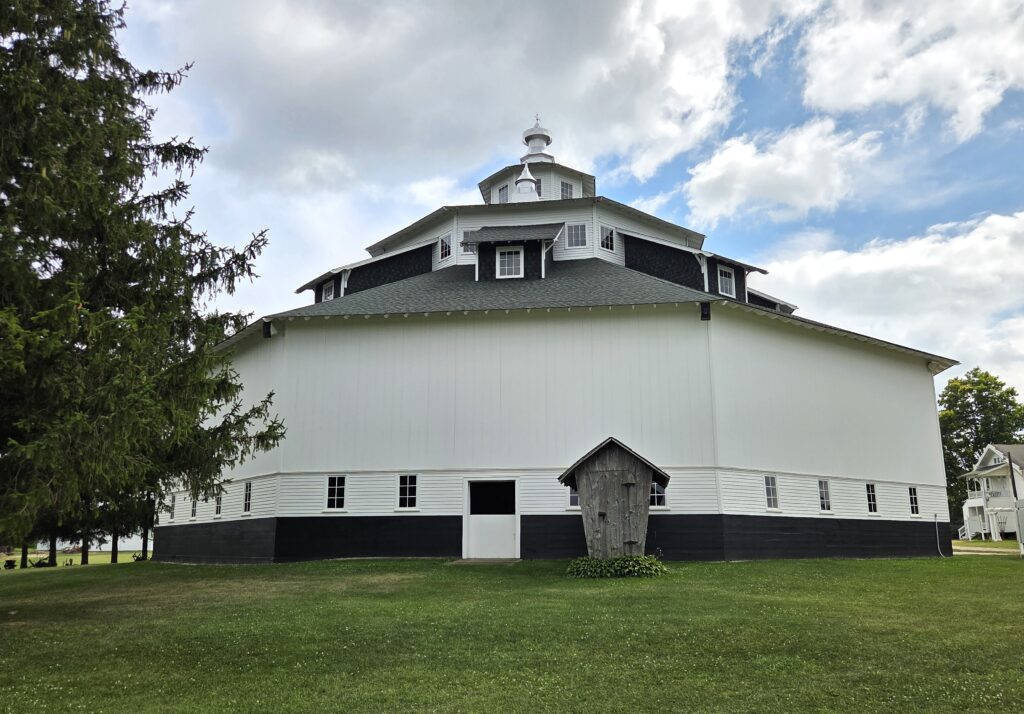
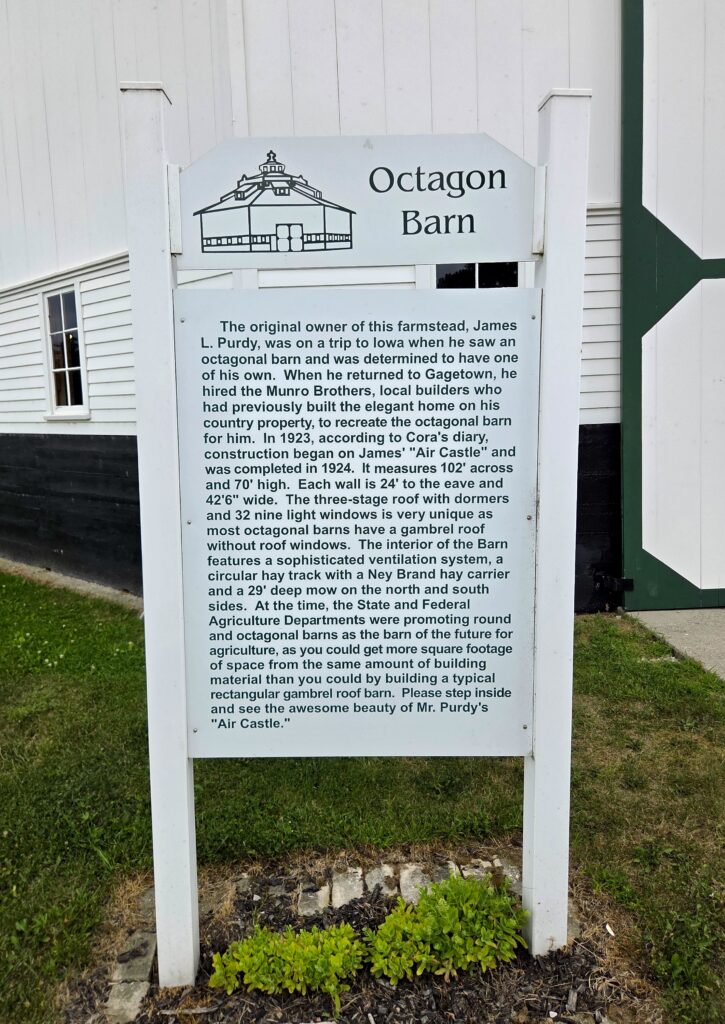
On the sign above you can see some of the facts and figures about the size of the barn. The Thumb Octagon Barn proved to be a far more interesting stop than we had ever imagined. If you like history, have any interest in farming, or simply appreciate seeing something unique here in Michigan then this is a place worth visiting when you head to the Thumb region.